DOI: 10.12890/2018_000886
Vogt-Koyanagi-Harada disease, a rare entity in Spain: the challenge of worldwide immigration and globalization
Authors
 albertoeirenegranada@gmail.com
Keywords
Vogt–Koyanagi–Harada disease, uveo-meningeal syndromes, aseptic meningitisAbstract
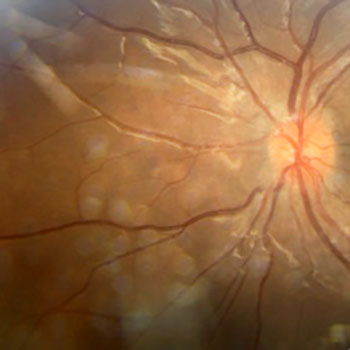
Vogt–Koyanagi–Harada disease is rare, mediated by autoimmune melanocyte inflammation and facilitated by genetic predisposition[1-3]. The main clinical features include uveitis, meningitis, tinnitus and sensorineural deafness, and skin and hair depigmentation. It usually develops in four consecutive stages: prodromal, acute uveitic, convalescent, and chronic or recurrent[4]. In view of the first two stages, the differential diagnosis takes into account uveo-meningeal syndromes. Treatment is based on high dose corticosteroids. We present the case of a 14-year-old girl admitted to hospital with fever, progressive uveo-meningeal symptoms, and sensorineural hearing loss. After work-up, the final diagnosis of Vogt–Koyanagi–Harada disease was made.